The studio shelf / Resources
Books Three books to help you study construction, observation, and expressive figure drawing.
Books Supplies Master Drawings Pose Library Choose a book for the skill you want to practice. You do not need all three. Read a little, draw from it, and return to your own observations.
Proportion and construction
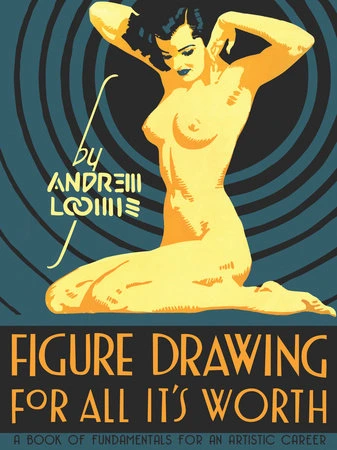
Figure Drawing for All It’s Worth Andrew Loomis
A systematic approach to building the figure through proportion, perspective, anatomy, and movement.
Useful for Artists who want a framework for organizing the whole figure, including drawing from imagination. Try it this way Compare one of the construction diagrams with a pose you are observing. Use its proportions as a starting point, then measure what you actually see. Keep in mind Idealized proportion systems are useful guides, but they do not describe every body or replace observation. View book and buying options ↗ Learning from master drawings
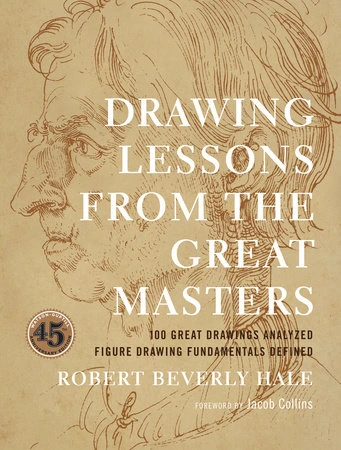
Drawing Lessons from the Great Masters Robert Beverly Hale
Close analysis of master drawings, with explanations and diagrams that connect visible marks to form and structure.
Useful for Students ready to slow down and study how accomplished artists organize a drawing. Try it this way Choose one example and study a single relationship: an overlap, a change of plane, or the balance of a large mass. Make a small study of that relationship. Keep in mind The explanations are dense. Work through a small section at a time rather than expecting a quick sequence of beginner drills. View book and buying options ↗ Stylization and storytelling
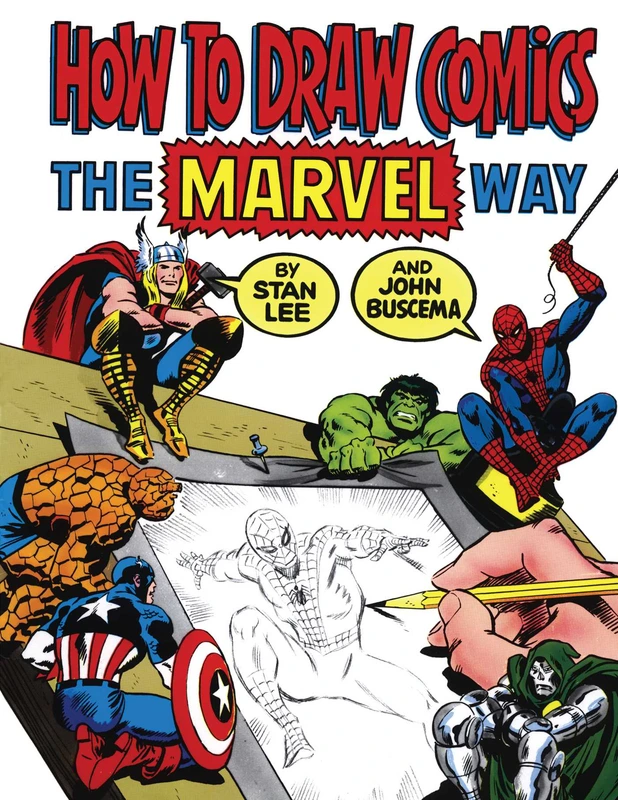
How to Draw Comics the Marvel Way Stan Lee and John Buscema
An illustrated introduction to comic drawing, from constructing figures to staging action and telling a visual story.
Useful for Students drawn to comics who want to connect basic construction with expressive poses and clear action. Try it this way Build a pose with simple masses first. Then compare what exaggerating the posture does to its energy and readability. Keep in mind Its superhero conventions emphasize idealization and exaggeration. Treat those choices as a style, not the standard for observational figure drawing. View book and buying options ↗ Links go to the publishers for edition details and buying options. These are not affiliate links.
Back to your drawing →