Values
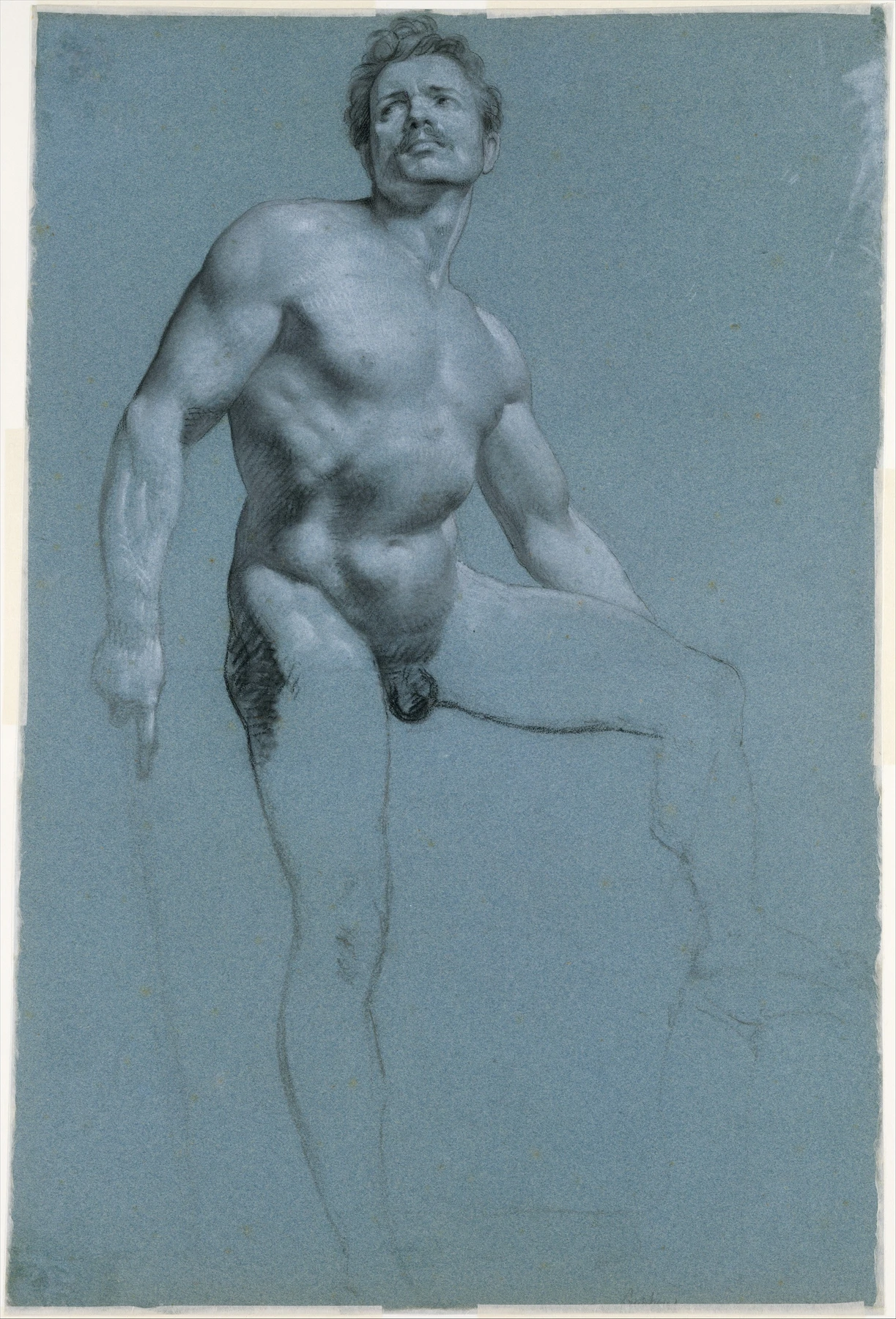
Standing Male Nude (verso)
Notice how white chalk lights the shoulder and chest while the blue paper carries the middle values.
Black and white chalk, stumped, on blue paper
The Met · Public domain ↗TheFigureDepartment
See More. Draw Better.
The studio collection / Resources
Look closely at how artists build a figure. Twenty historical drawings, with one detail to notice in each.
Use “Notice how…” as a starting point, then enlarge the drawing and make your own observations. This collection includes nude figure studies and anatomical drawings.
20 drawings
Values
Notice how white chalk lights the shoulder and chest while the blue paper carries the middle values.
Black and white chalk, stumped, on blue paper
The Met · Public domain ↗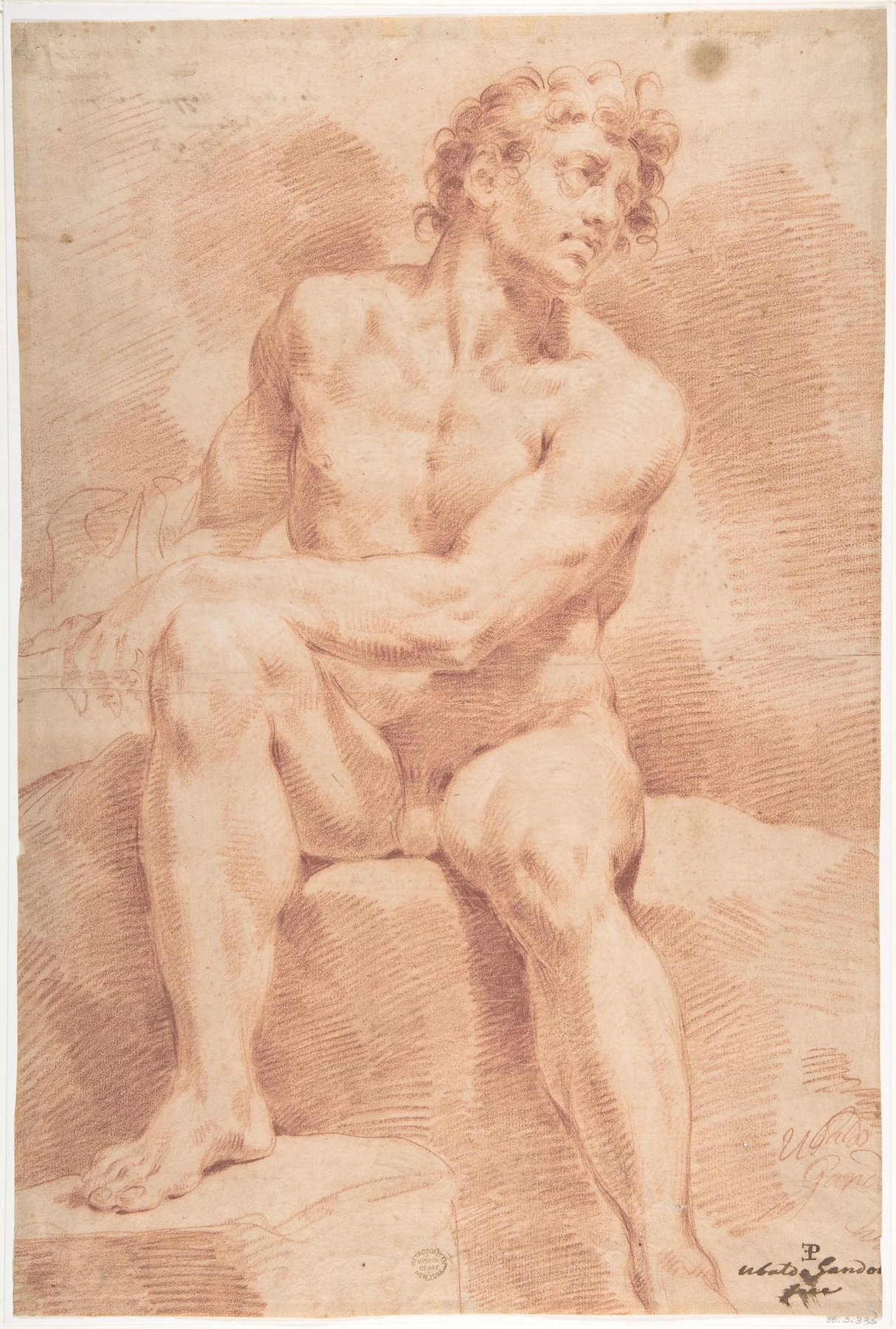
Construction
Notice how the shoulder line turns differently from the knees, giving the seated body a twist.
Red chalk, highlighted with white
The Met · Public domain ↗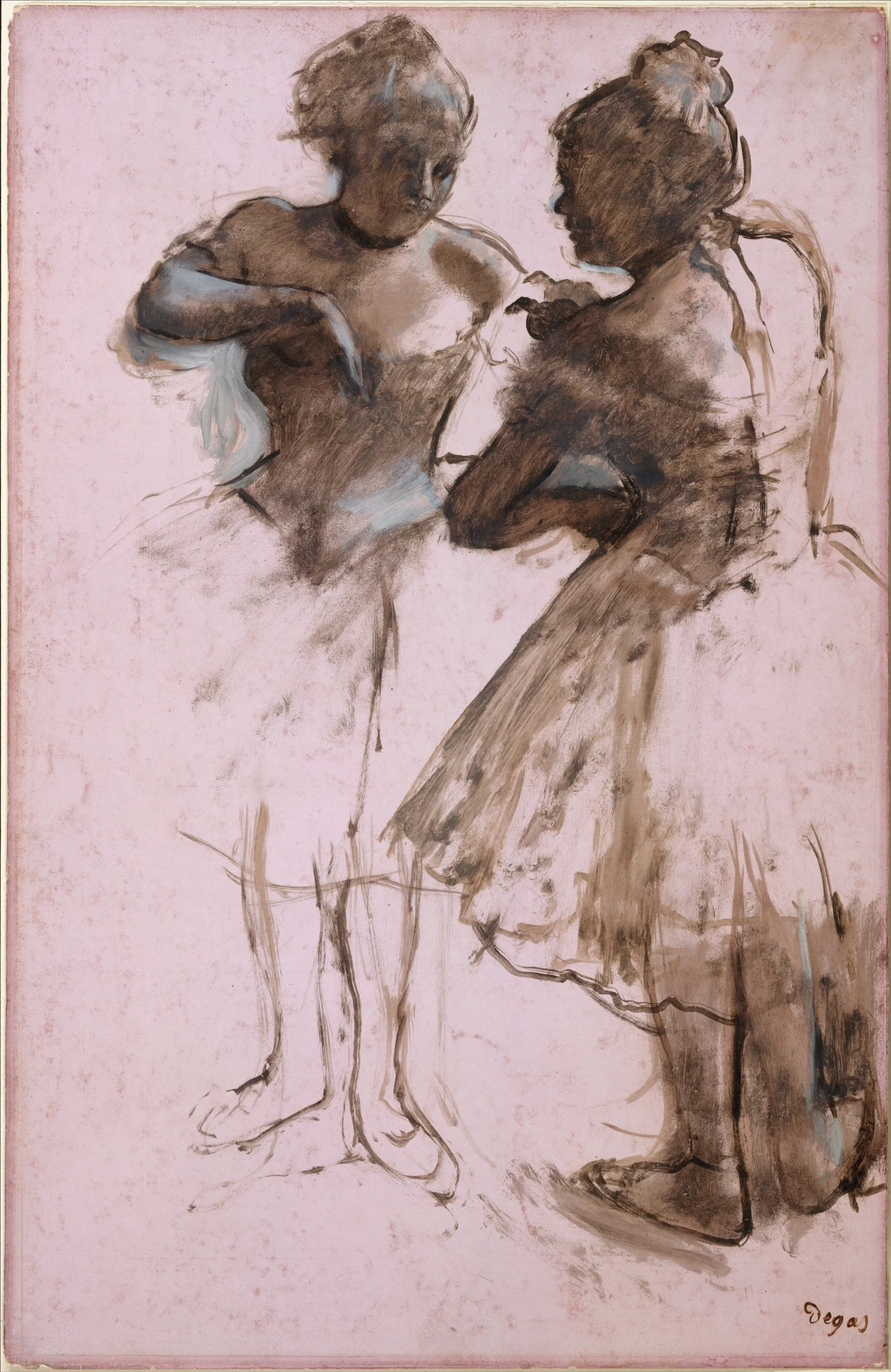
Values
Notice how the dark upper bodies read as broad masses while the legs remain lightly described.
Dark brown wash and white gouache on bright pink commercially coated wove paper, now faded to pale pink
The Met · Public domain ↗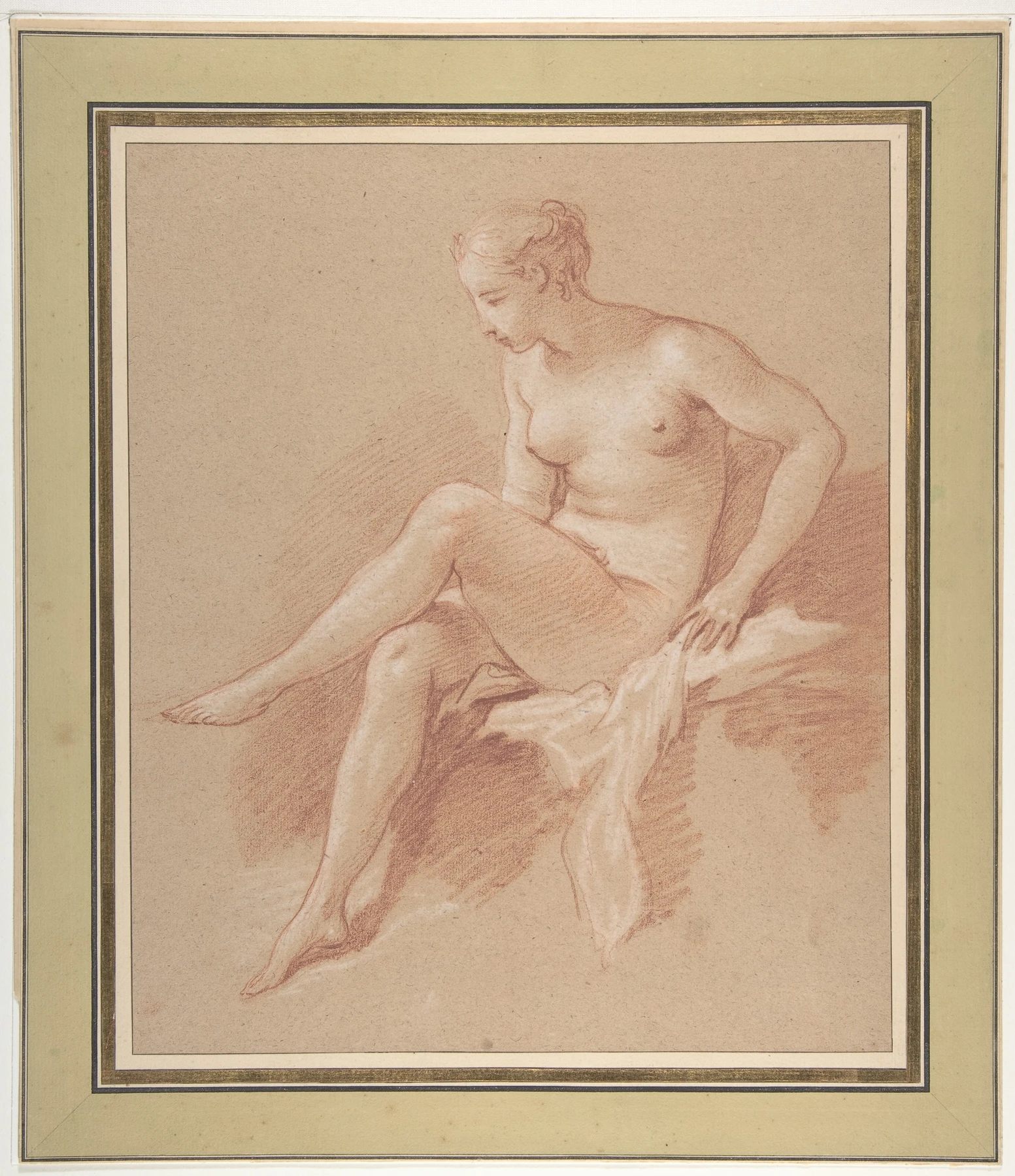
Edges
Notice how the stronger marks around the bent knee contrast with the lighter edges of the torso.
Red chalk, heightened with white on beige paper
The Met · Public domain ↗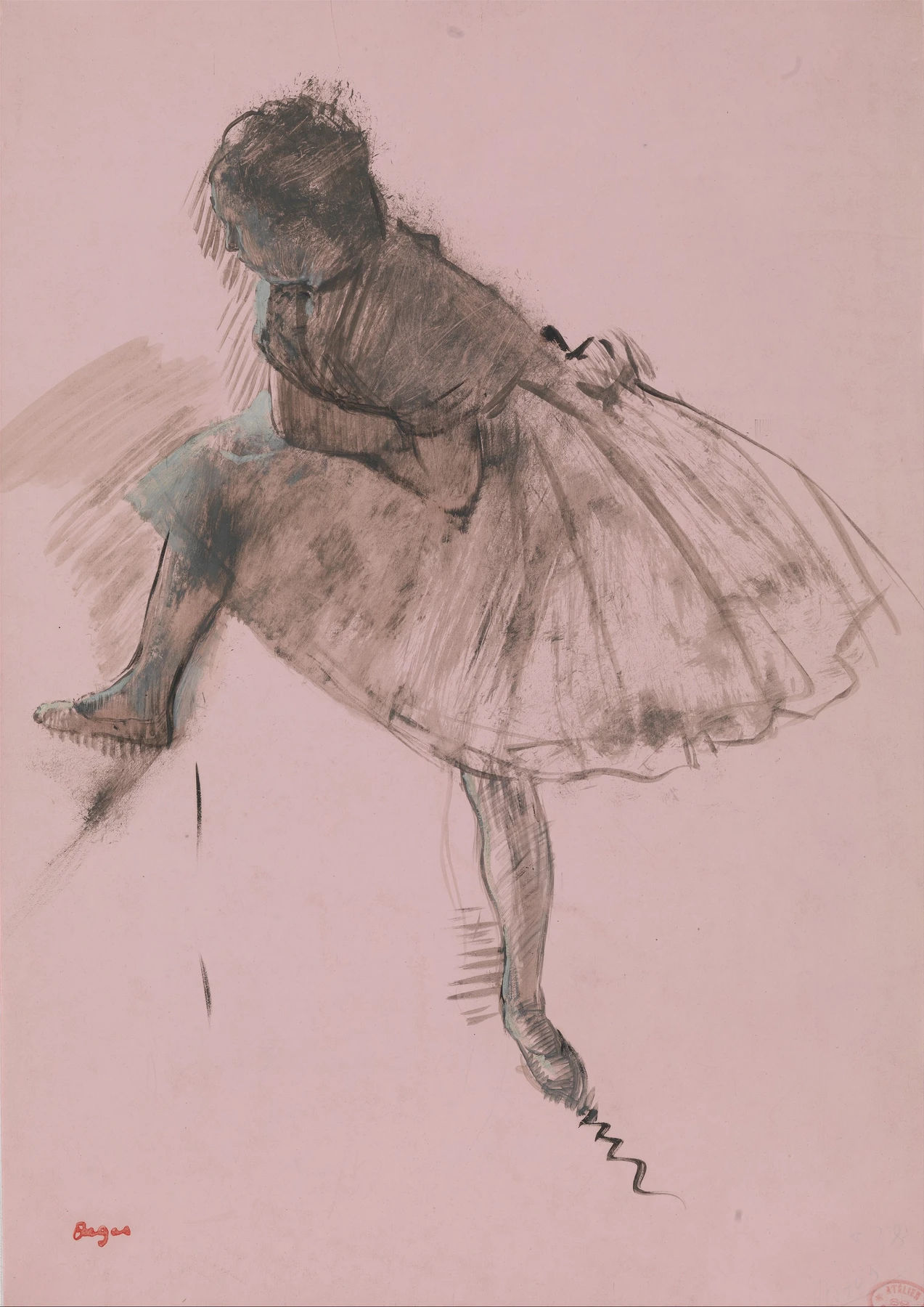
Gesture
Notice how the lifted knee and lowered head pull the figure into a compact bending action.
Oil with opaque watercolor on prepared pink paper (recto); oil on prepared pink paper (verso)
The Met · Public domain ↗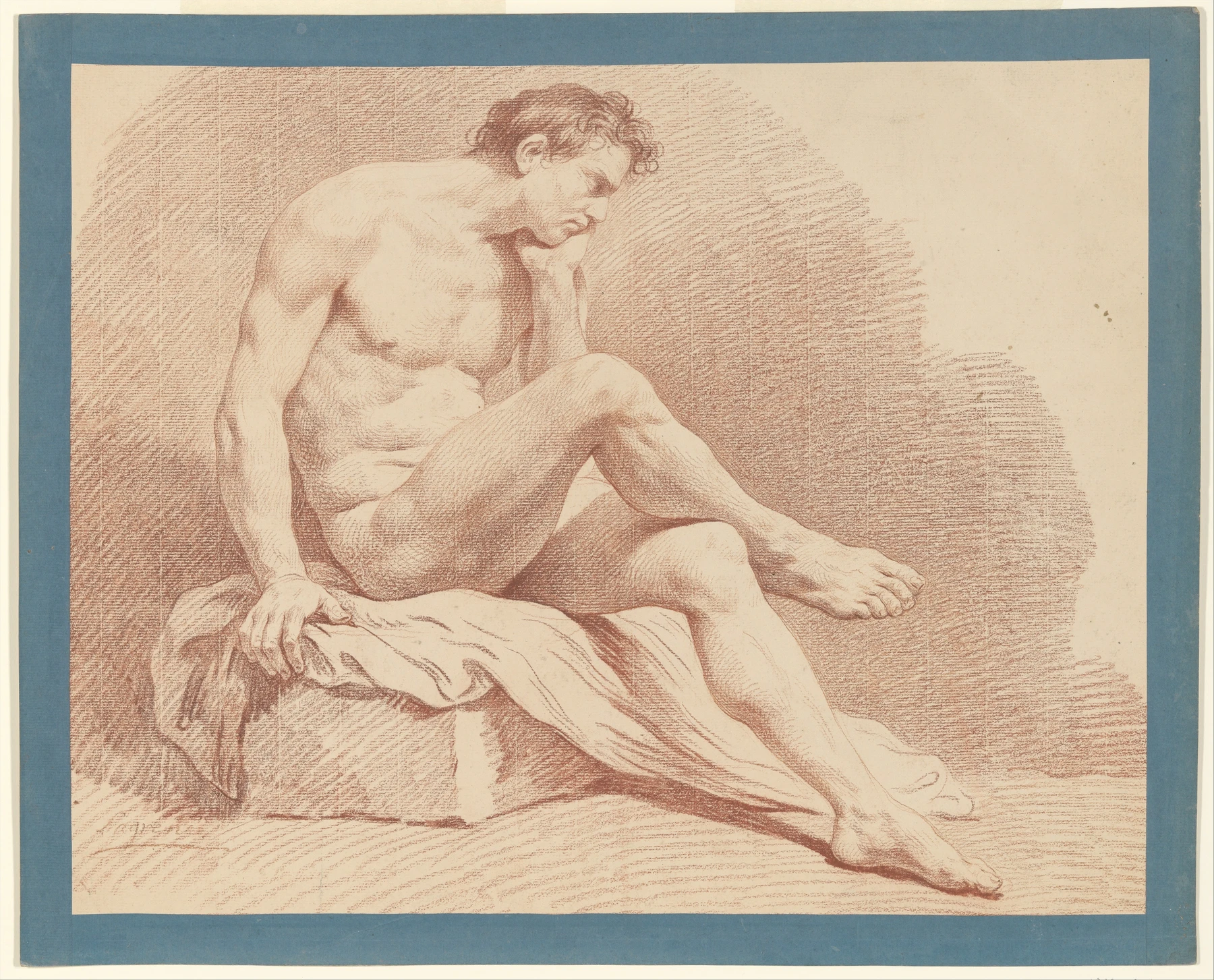
Construction
Notice how the thigh overlaps the lower leg, helping you read the depth of the seated pose.
Red chalk
The Met · Public domain ↗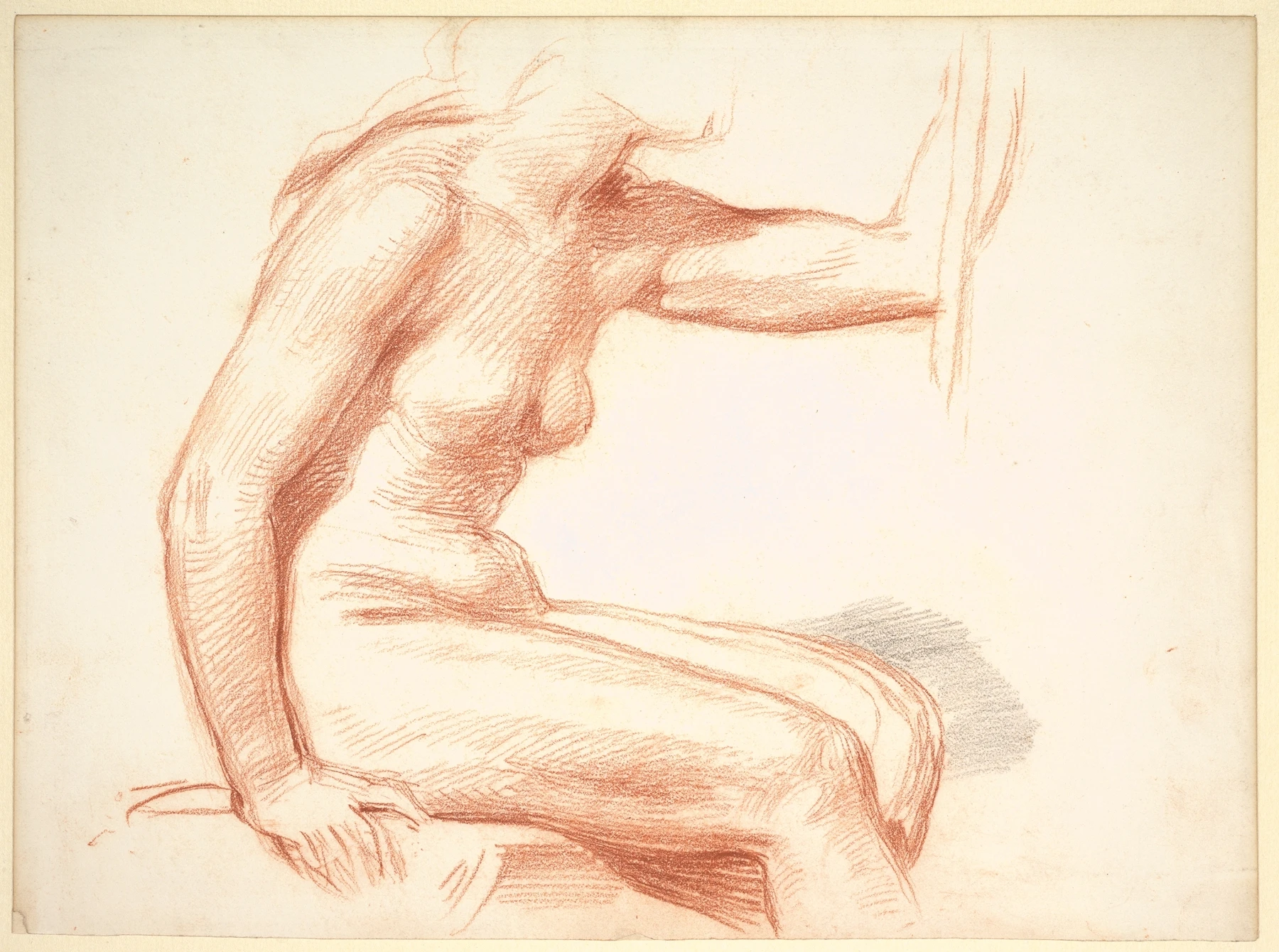
Edges
Notice how the darker lower contour of the thigh separates it from the lighter marks above.
Red and black chalk
The Met · Public domain ↗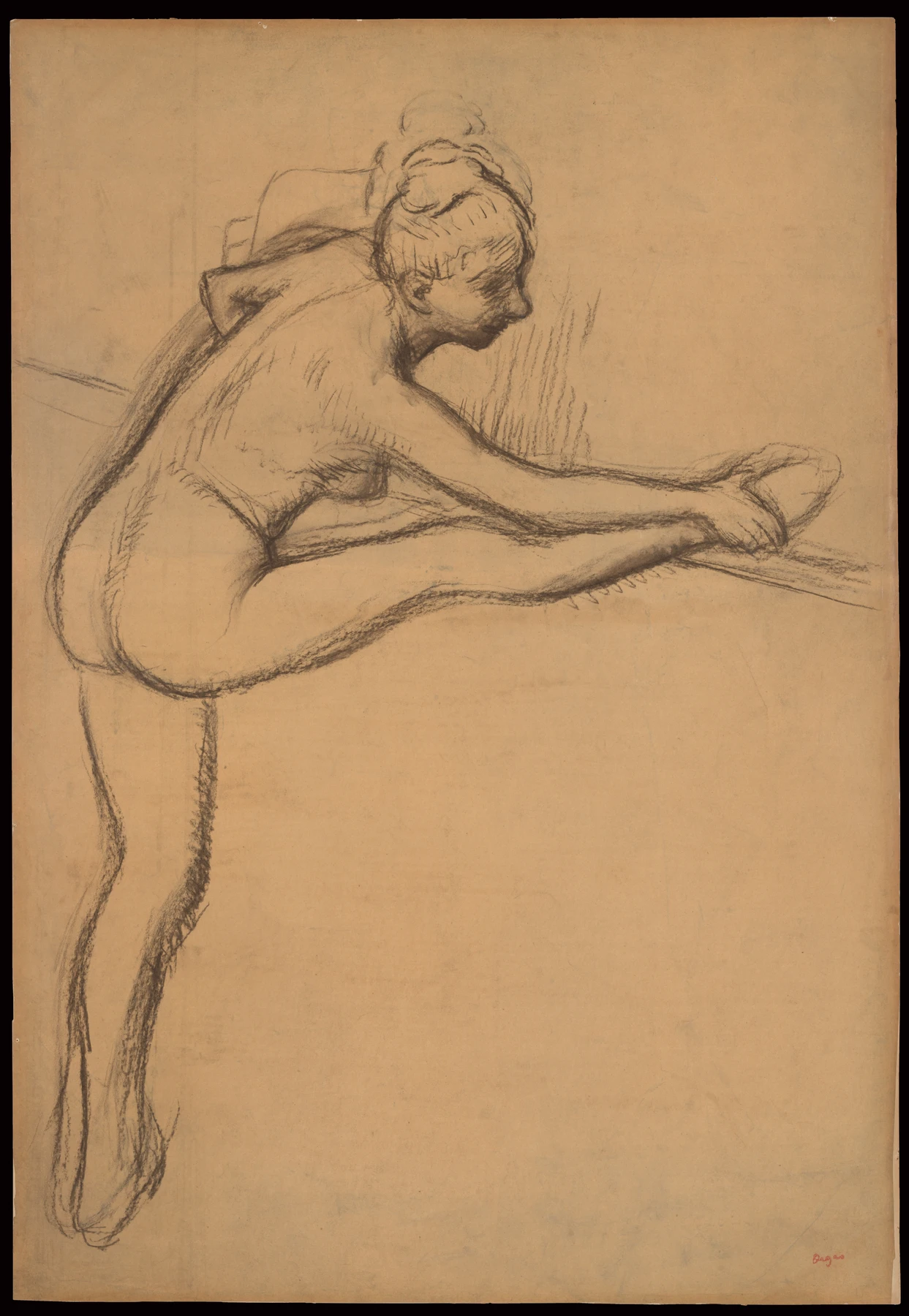
Gesture
Notice how the reaching arms continue the forward lean of the torso toward the raised foot.
Charcoal on tracing paper laid down on card
The Met · Public domain ↗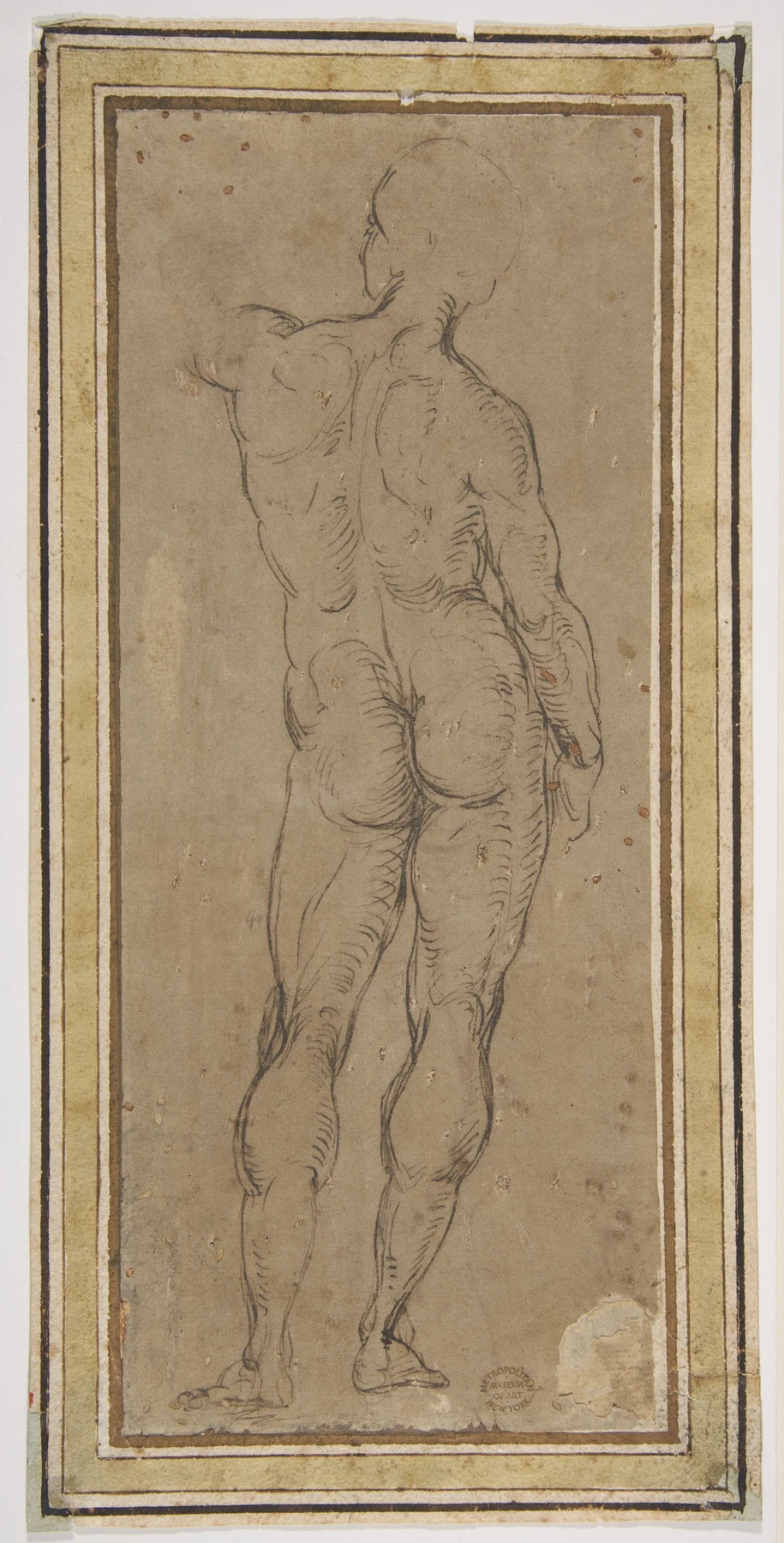
Construction
Notice how the shoulder blades, spine, and hips organize the back before the smaller details.
Pen and brown ink on brown paper
The Met · Public domain ↗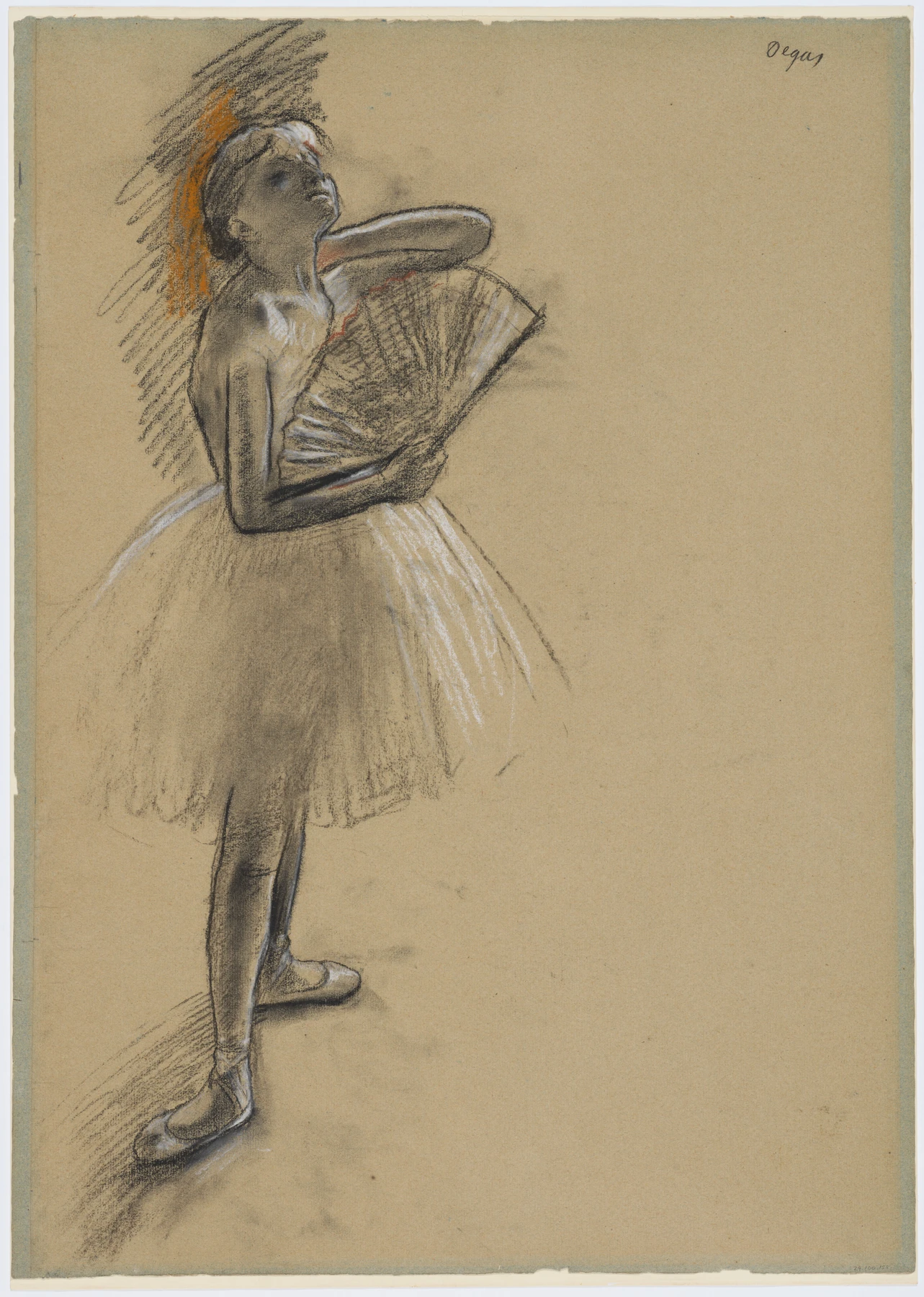
Values
Notice how the dark fan forms a clear shape against the lighter dress and supporting leg.
Pastel on gray-green laid paper
The Met · Public domain ↗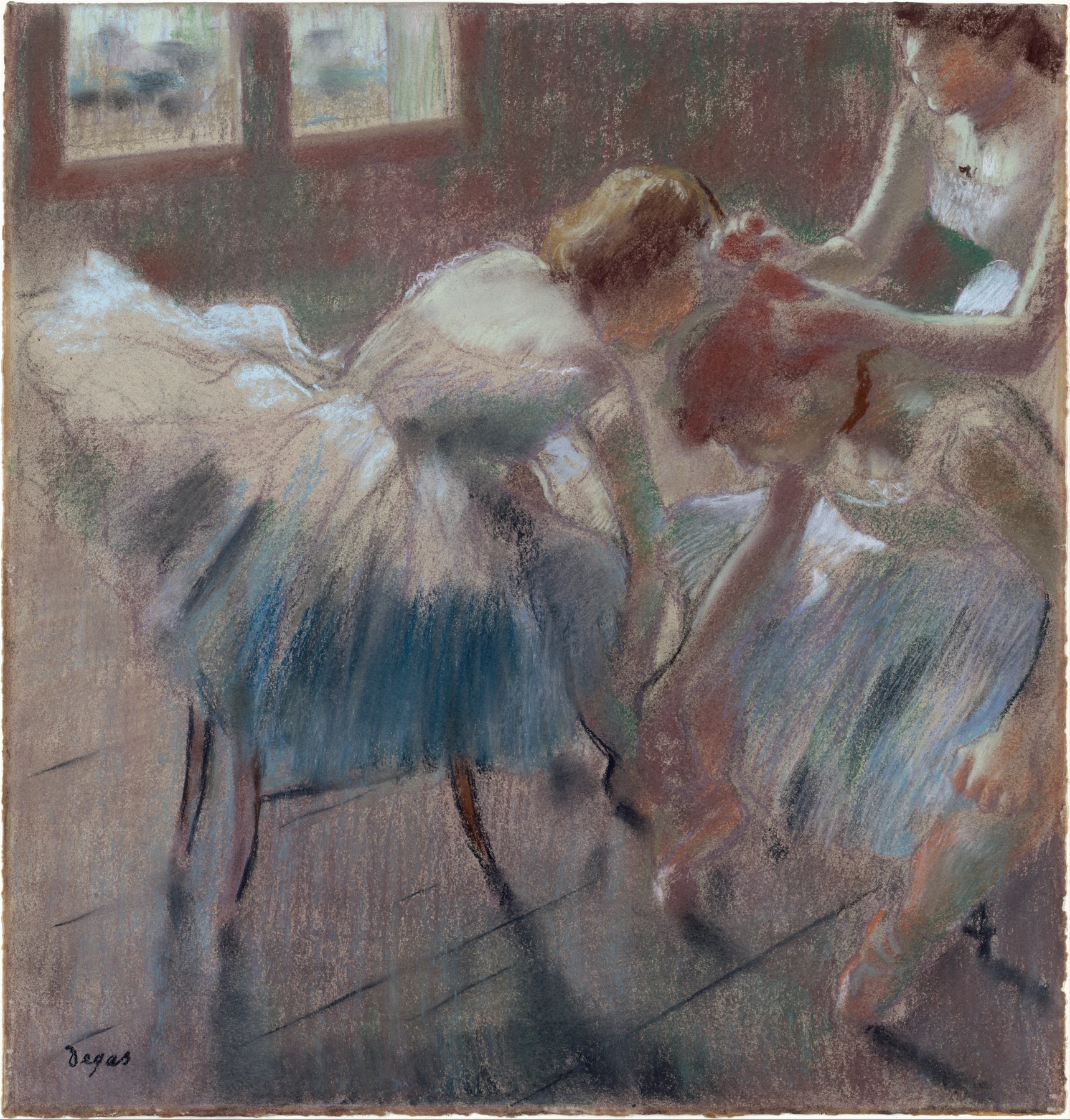
Edges
Notice how soft marks let the skirts merge while firmer accents describe the arms and backs.
Pastel on buff-colored wove paper
The Met · Public domain ↗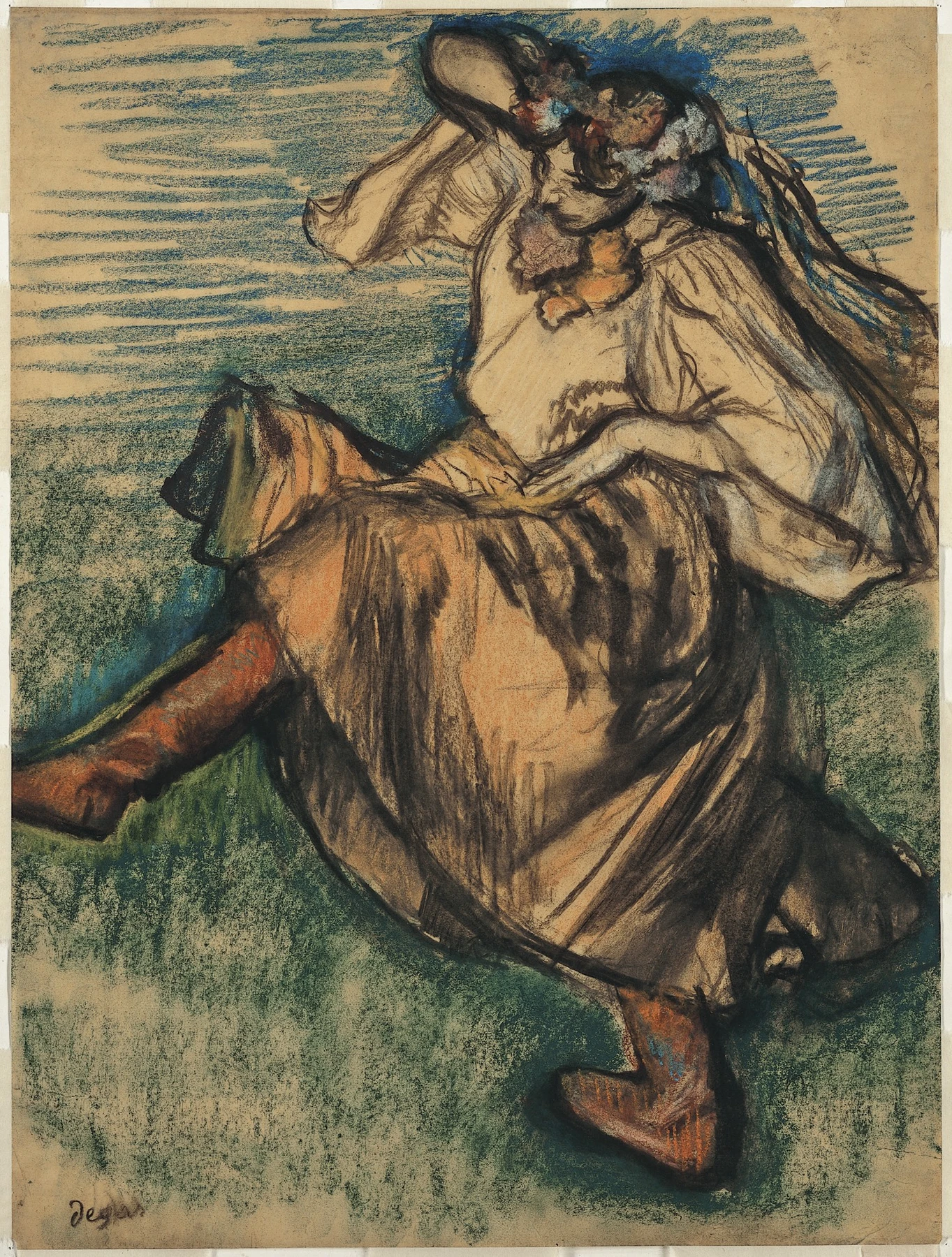
Gesture
Notice how the lifted leg, raised arms, and swinging skirt carry the same energetic movement.
Pastel over charcoal on tracing paper
The Met · Public domain ↗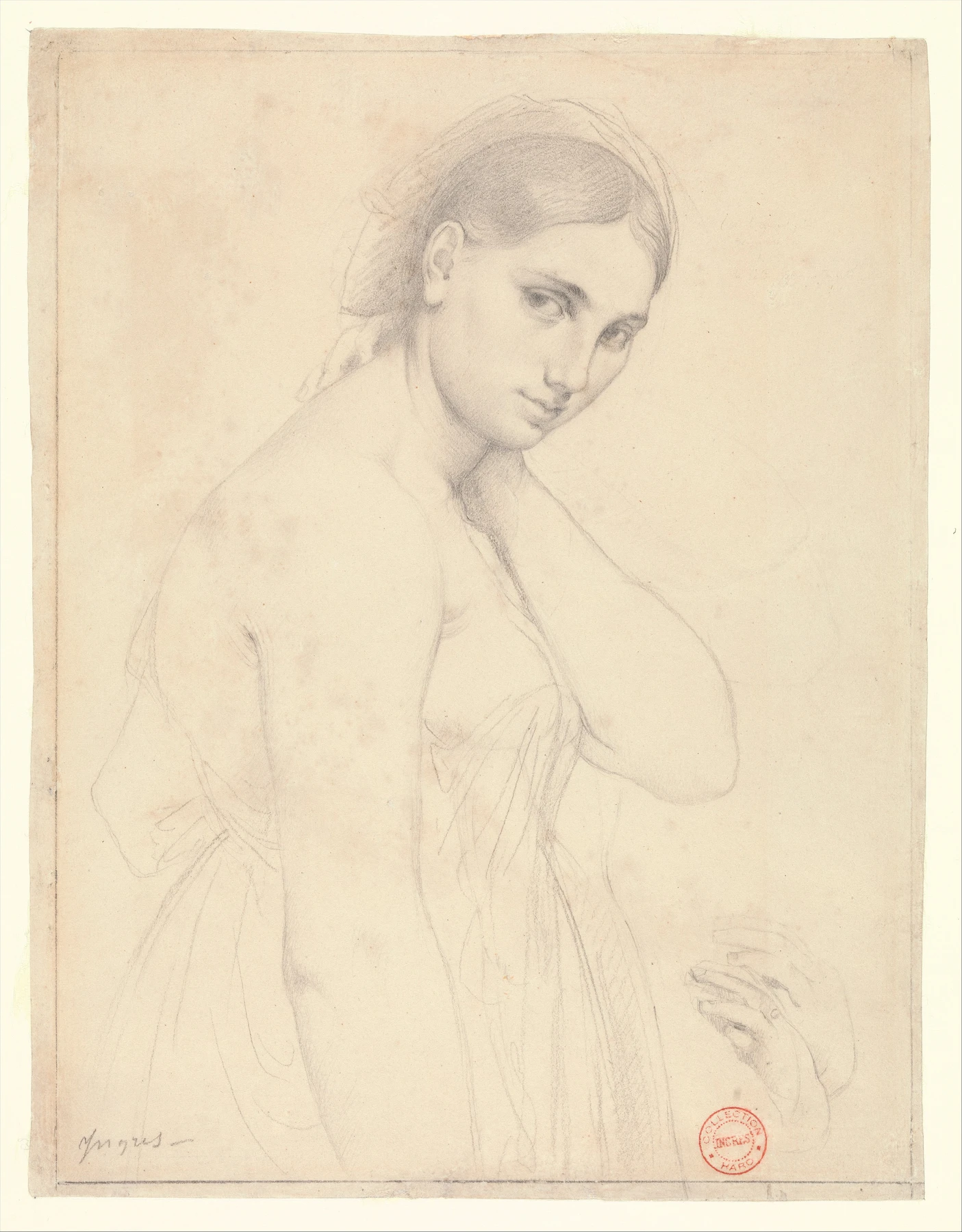
Edges
Notice how the face is more firmly described than the lightly suggested clothing and arm.
Graphite on white wove paper
The Met · Public domain ↗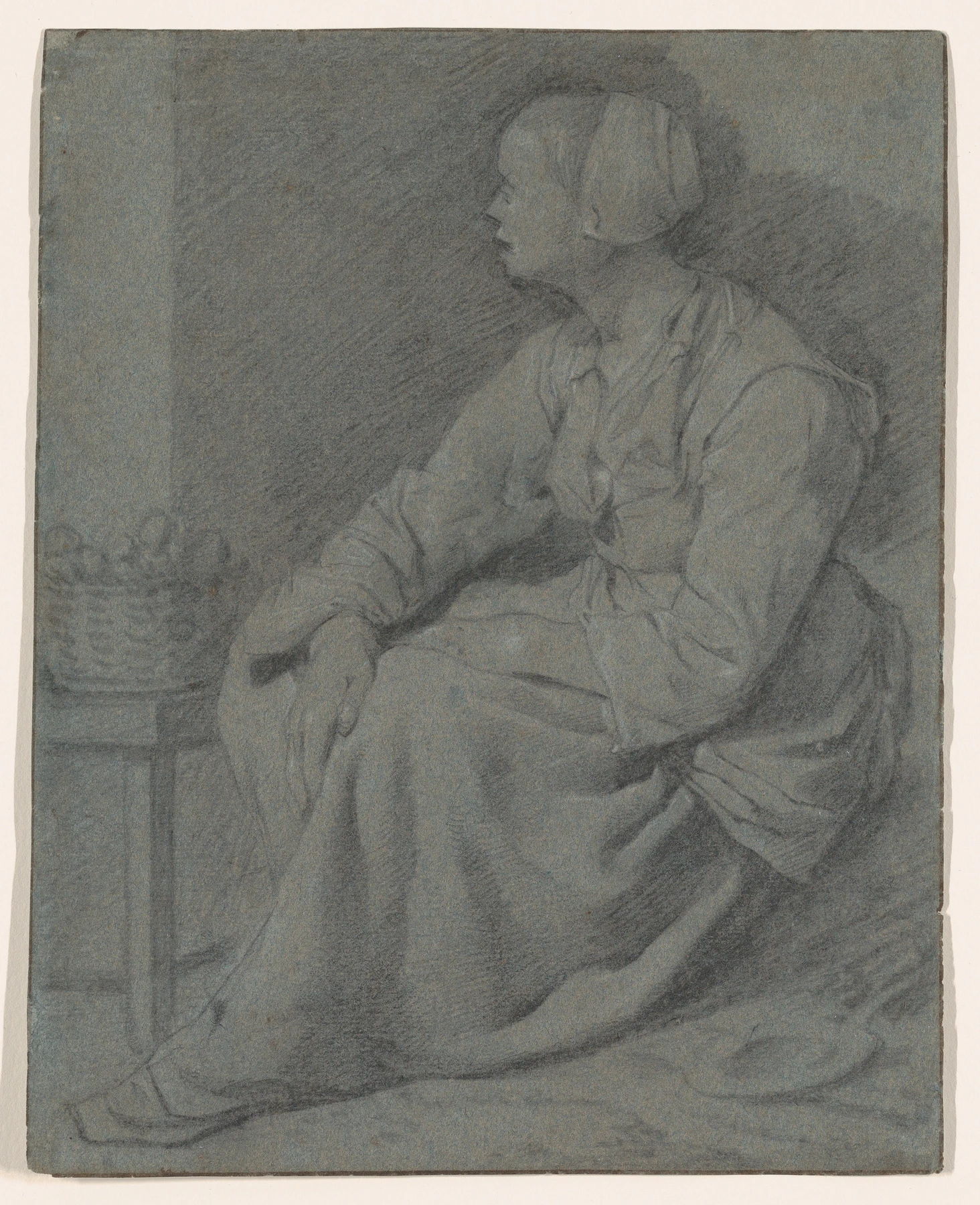
Values
Notice how white chalk picks out the folds while the blue paper holds the quieter middle values.
Black chalk, heightened with white chalk, on blue paper; framing line in pen and brown ink, probably by a later hand
The Met · Public domain ↗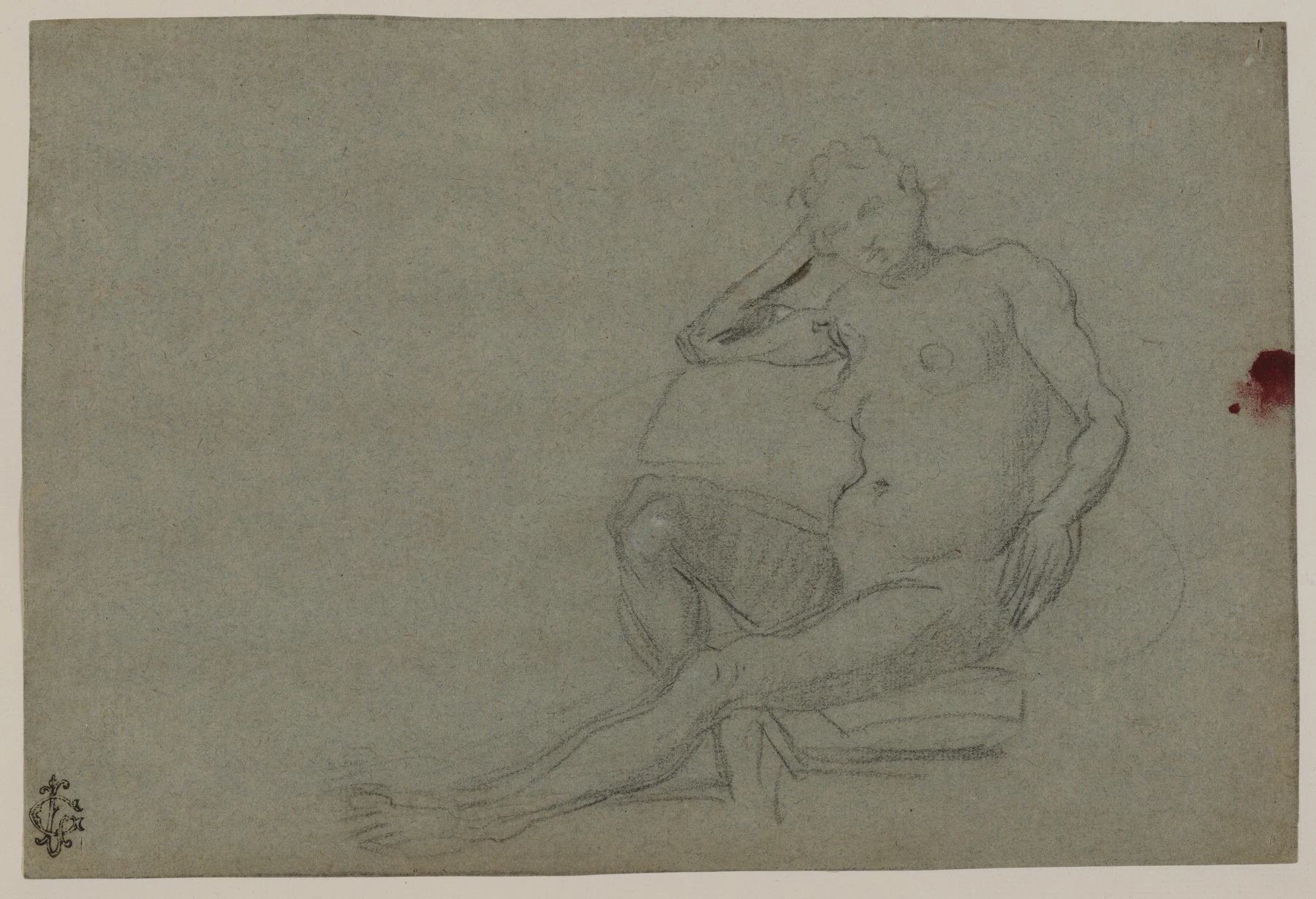
Construction
Notice how the extended legs and bent torso fit into one low, connected silhouette.
Black and white chalk on blue paper
The Met · Public domain ↗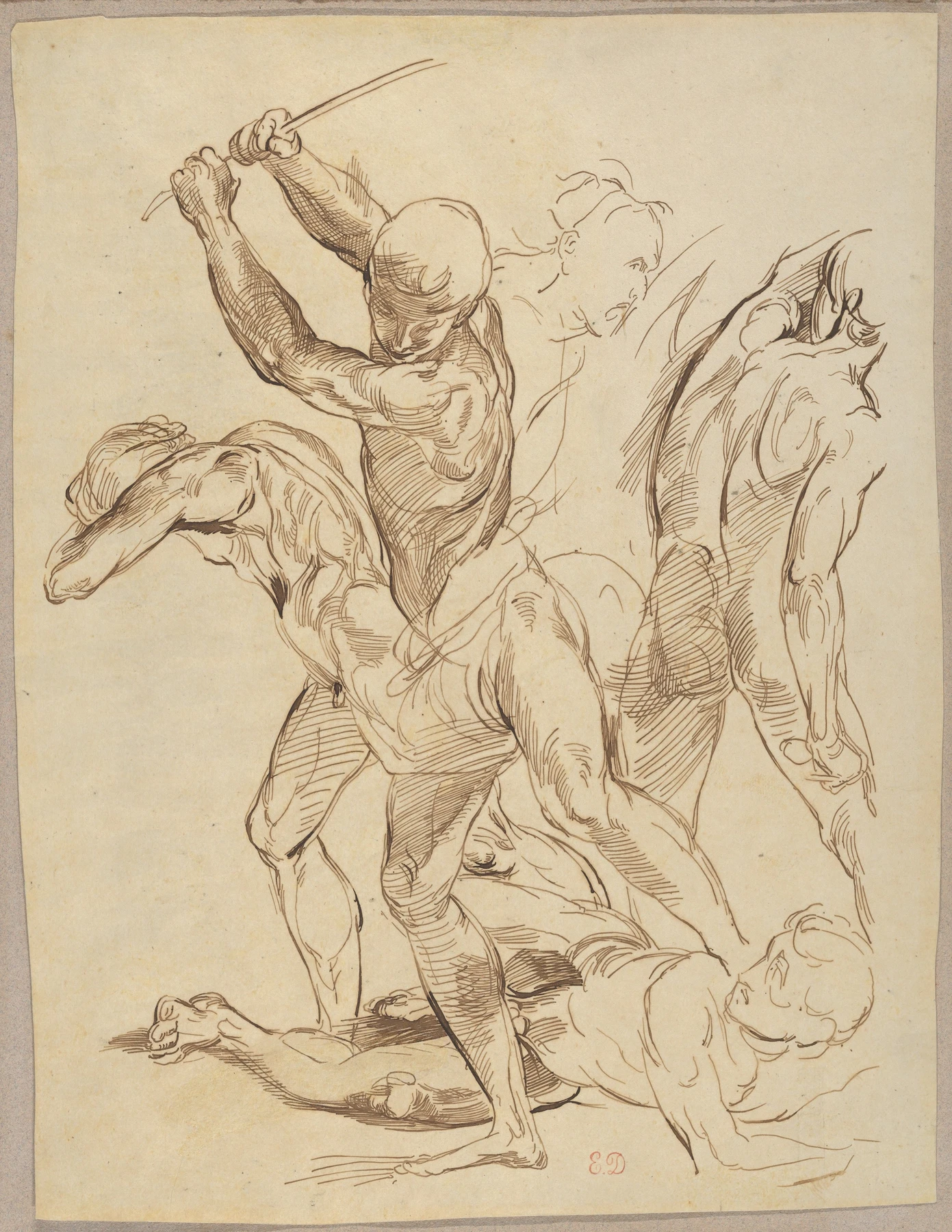
Gesture
Notice how the raised arms and bent legs form opposing diagonals that make the struggle readable.
Pen and brown ink on tracing paper laid down
The Met · Public domain ↗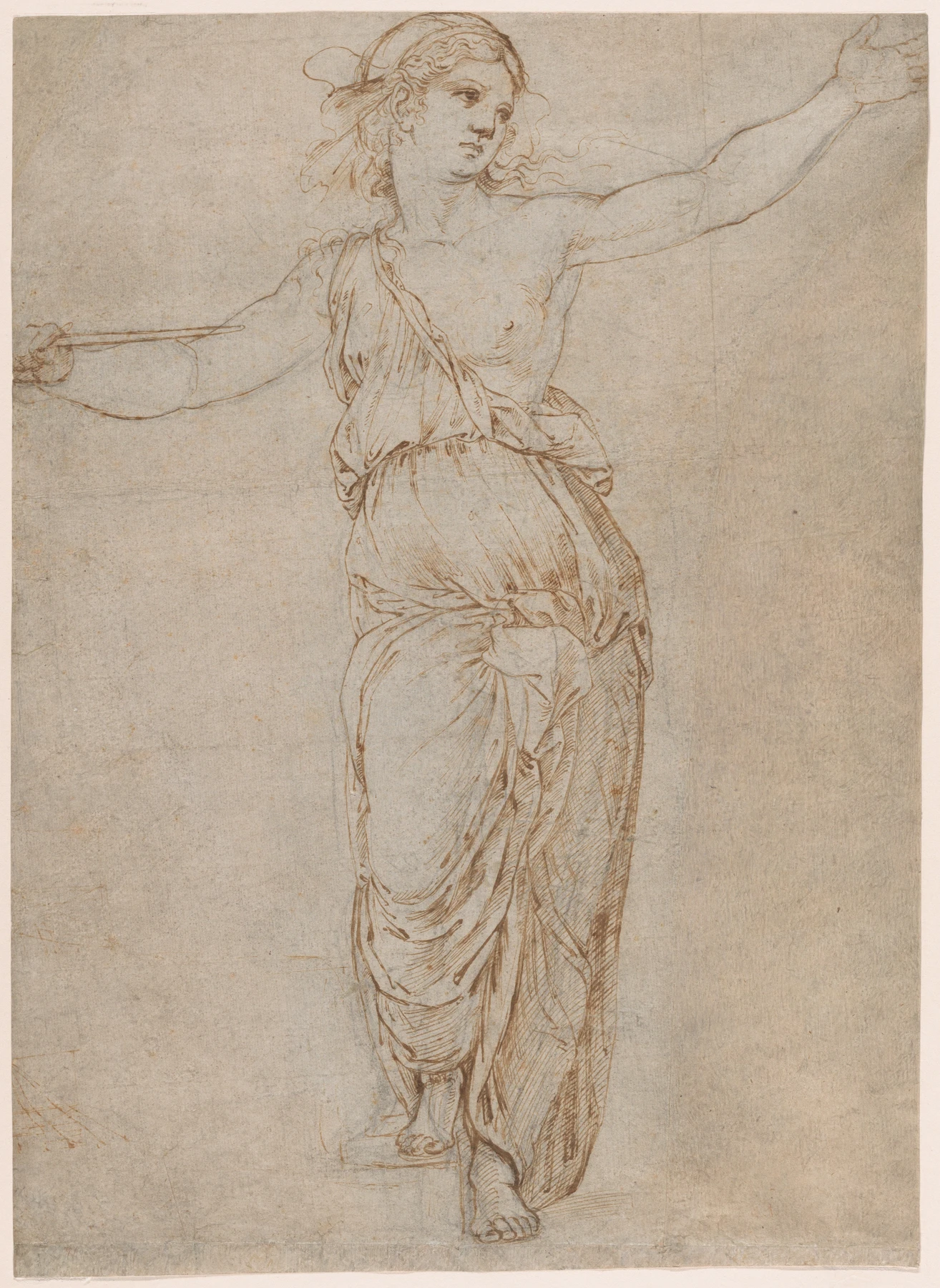
Gesture
Notice how the outstretched arms open the pose while the drapery gathers around the standing figure.
Pen and brown ink over black chalk, partially incised with a stylus (recto); rubbed with black chalk for transfer (verso)
The Met · Public domain ↗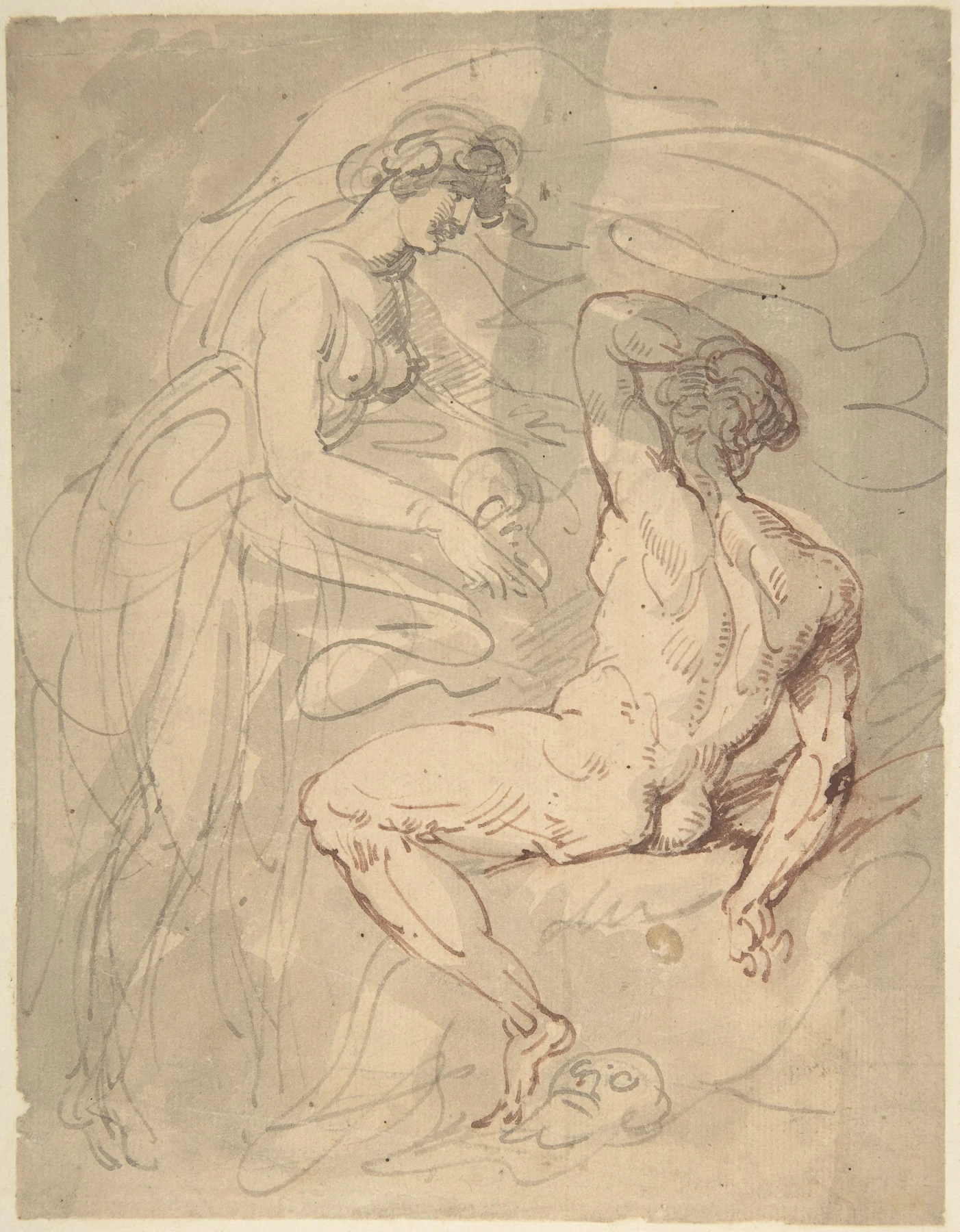
Gesture
Notice how the two figures lean toward one another, making their conversation visible in the poses.
Pen and brown ink, brush and gray wash
The Met · Public domain ↗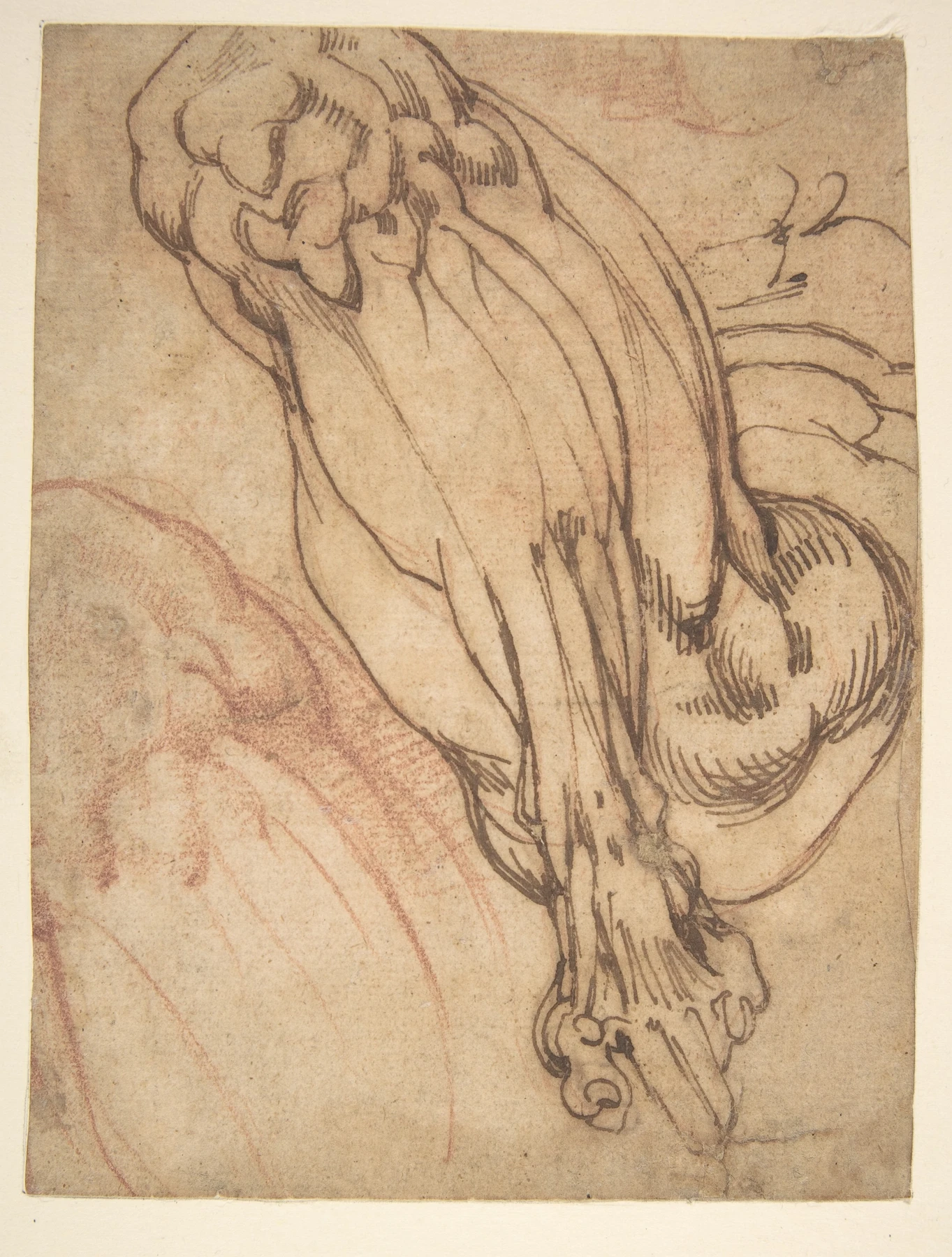
Construction
Notice how the long muscle shapes narrow toward the joints instead of keeping the same width.
Pen and brown ink, and red chalk (recto); pen and brown ink (verso)
The Met · Public domain ↗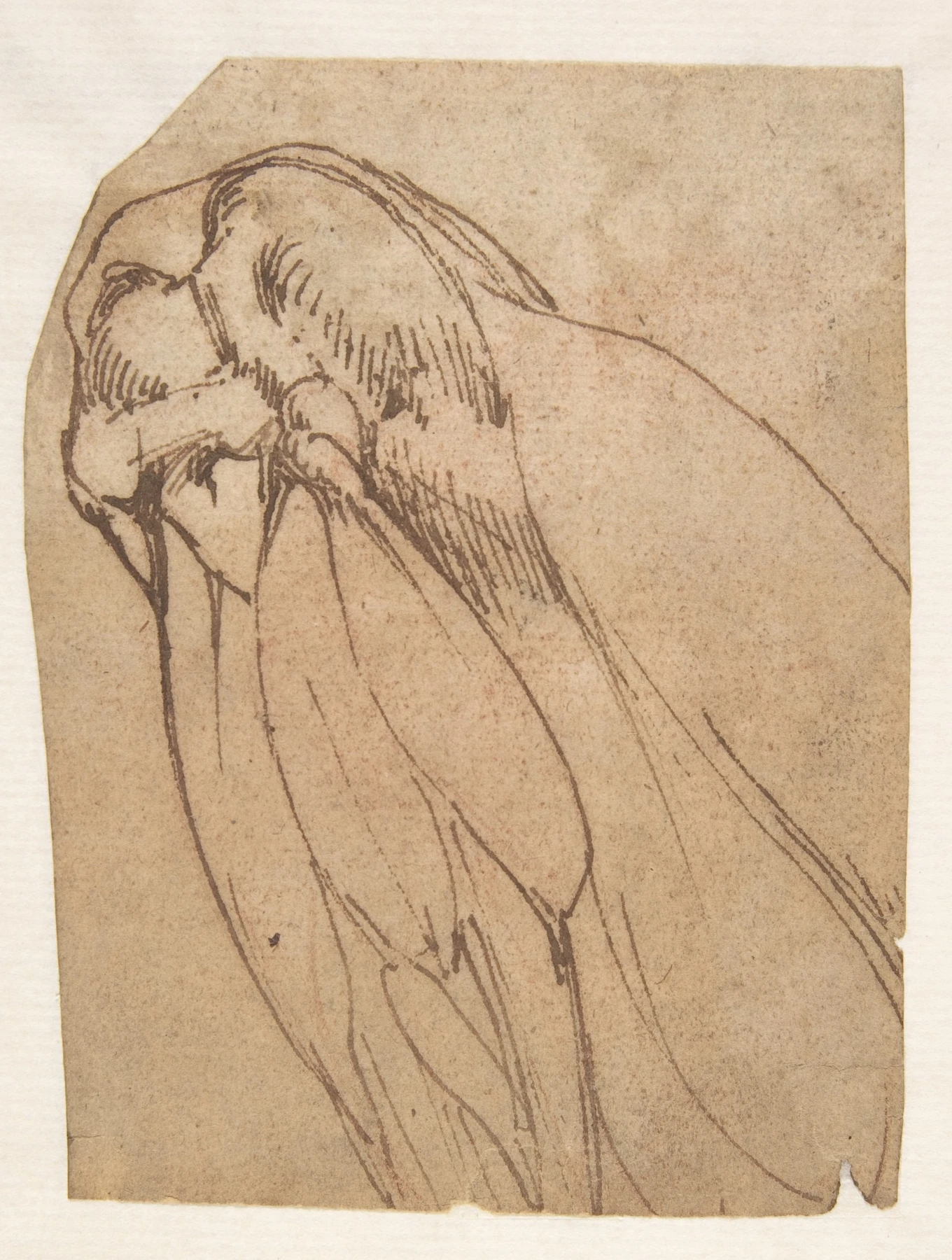
Construction
Notice how short curved marks describe the knee as a turning form rather than a flat outline.
Pen and brown ink
The Met · Public domain ↗No drawings match those filters. Try another artist or focus.
Images: The Metropolitan Museum of Art, Open Access (CC0). Artist attributions and dates follow the museum records, including “After” and “School of.” Our “Notice how…” notes are observations written for this collection.